Polyurea Foam Coatings: Hard Coating EPS, XPS and Spray Foam
Polyurea foam coatings explained: why foam needs a hard coat, polyurea vs urethane and hybrid, hardness, SPF topcoats, a coverage estimator and common problems.
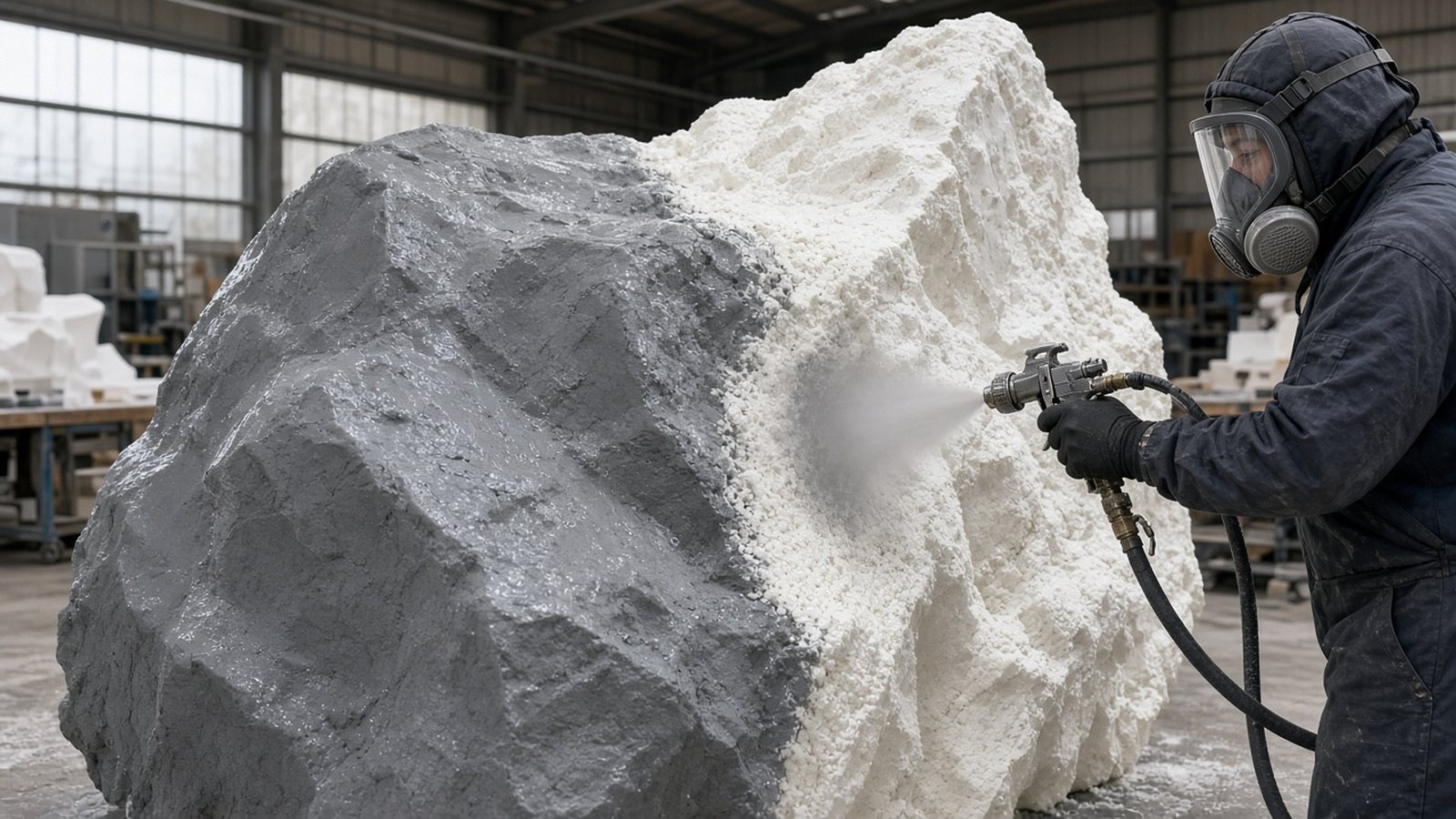
Foam is easy to shape and almost useless on its own outdoors. EPS and XPS dent at a fingernail, crumble in the sun and fall apart when kids climb on them. Spray foam roofs need something over the top to handle UV and foot traffic. That’s where polyurea foam coatings come in. A spray-applied polyurea hard coat turns a carved foam block into a sign, a theme park rock or a stage prop that can take a beating. Over spray foam insulation or roofing, it adds a tough, waterproof skin. This guide explains why the combination works, which coating type fits which job, how to estimate material and what goes wrong.
Why coat foam with polyurea
Foam is the preferred way to build large custom shapes. Volatile Free, Inc. (VFI), which makes foam hard coats, explains in its overview of EPS theming hard coats that shops cut EPS or XPS with a hot wire or a 3D CNC foam cutter, which is fast and replicates designs accurately. The catch, in VFI’s words, is that EPS doesn’t have the inherent strength to resist impacts or outdoor conditions.
A hard coat fixes that. It gives the shape strength and durability, and because it’s sprayed, it can lay down a smooth or textured finish quickly.
Polyurea is a strong choice for this work because:
- It cures in seconds. You can build thickness quickly on vertical and overhead surfaces without sags.
- It’s typically 100% solids. No solvent to flash off, which matters because many solvents attack polystyrene foam.
- It’s tough. Impact and abrasion resistance is where polyurea shines.
- It’s waterproof. A continuous membrane with no seams.
Polyurea foam coatings vs urethane and hybrid hard coats
VFI groups foam hard coats into three types. Here’s how it describes each:
| Hard coat type | Strengths | Trade-offs | Good for |
|---|---|---|---|
| Polyurethane | Economical, rigid, sprays or brushes, sands easily | Less impact resistance | Low-traffic areas, hanging pieces |
| Polyurea | Better impact resistance, lower moisture sensitivity during application, exterior use | More expensive than polyurethane | High-traffic and outdoor pieces |
| Polyurea hybrid | Blends properties of both: impact resistant, outdoor-friendly, sandable | Properties vary by formulation | Outdoor pieces that need a sanded finish |
For a shape that people will touch, sit on or bump into, VFI’s descriptions point you to polyurea or a hybrid. For an indoor hanging piece where finish matters most, a sandable urethane may be the better pick. If you’re not sure what a product actually is, our post on pure polyurea vs hybrid explains how to tell.
Hardness and what it means on foam
Foam hard coats are usually listed by Shore D hardness. VFI’s own lineup runs from around 40 D impact-resistant coats to 80 D machinable coats, for example. Harder coats feel more like plastic and resist dents. Softer, more elastomeric coats absorb impacts and flex with the foam.
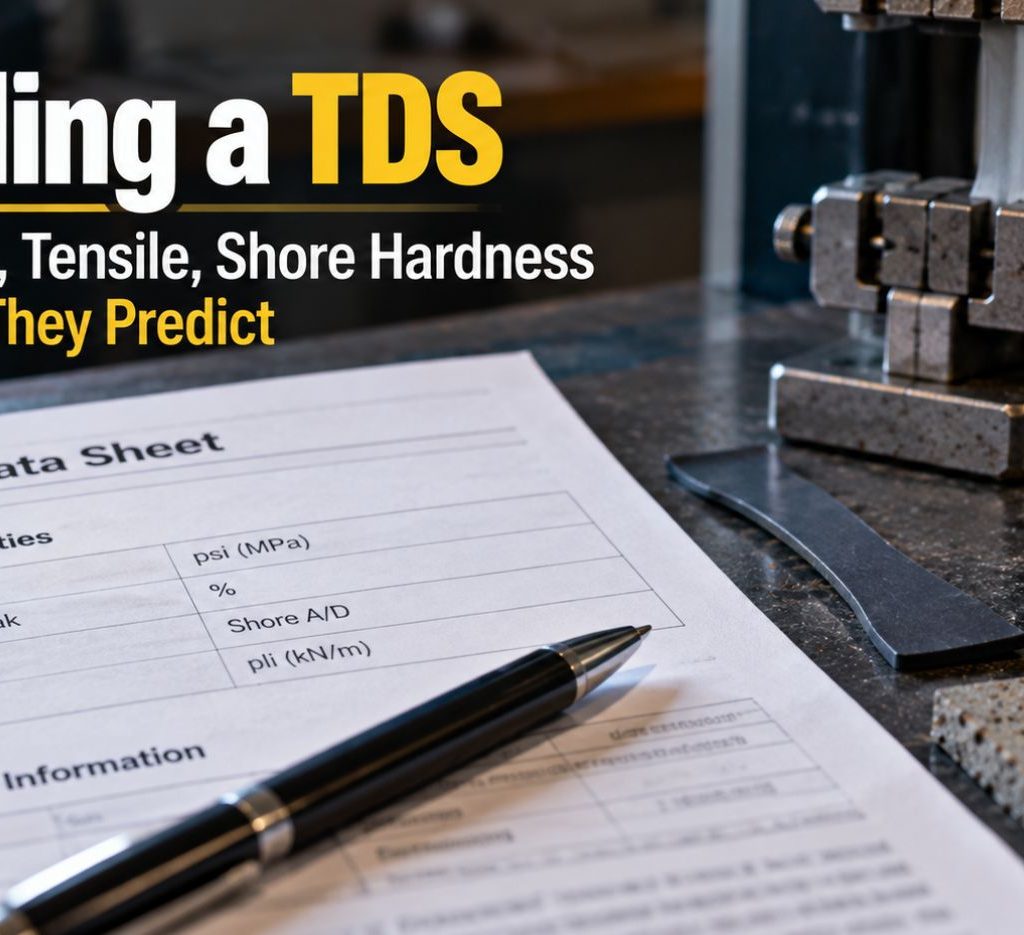
That second point matters. Foam moves with temperature, and a coat that’s too rigid for the substrate can crack. If you’re new to the scales, this explainer on Shore A vs Shore D hardness covers the basics, and our guide to reading a TDS explains how hardness interacts with elongation and tensile strength.
Polyurea over spray foam insulation and roofing
The other big use of polyurea foam systems is over spray polyurethane foam (SPF). On a roof, SPF gives insulation and a continuous, joint-free substrate, but it can’t be left bare. UV breaks down the foam surface, and foot traffic dents it. A polyurea topcoat adds a waterproof, traffic-resistant layer.
A few points to plan around:
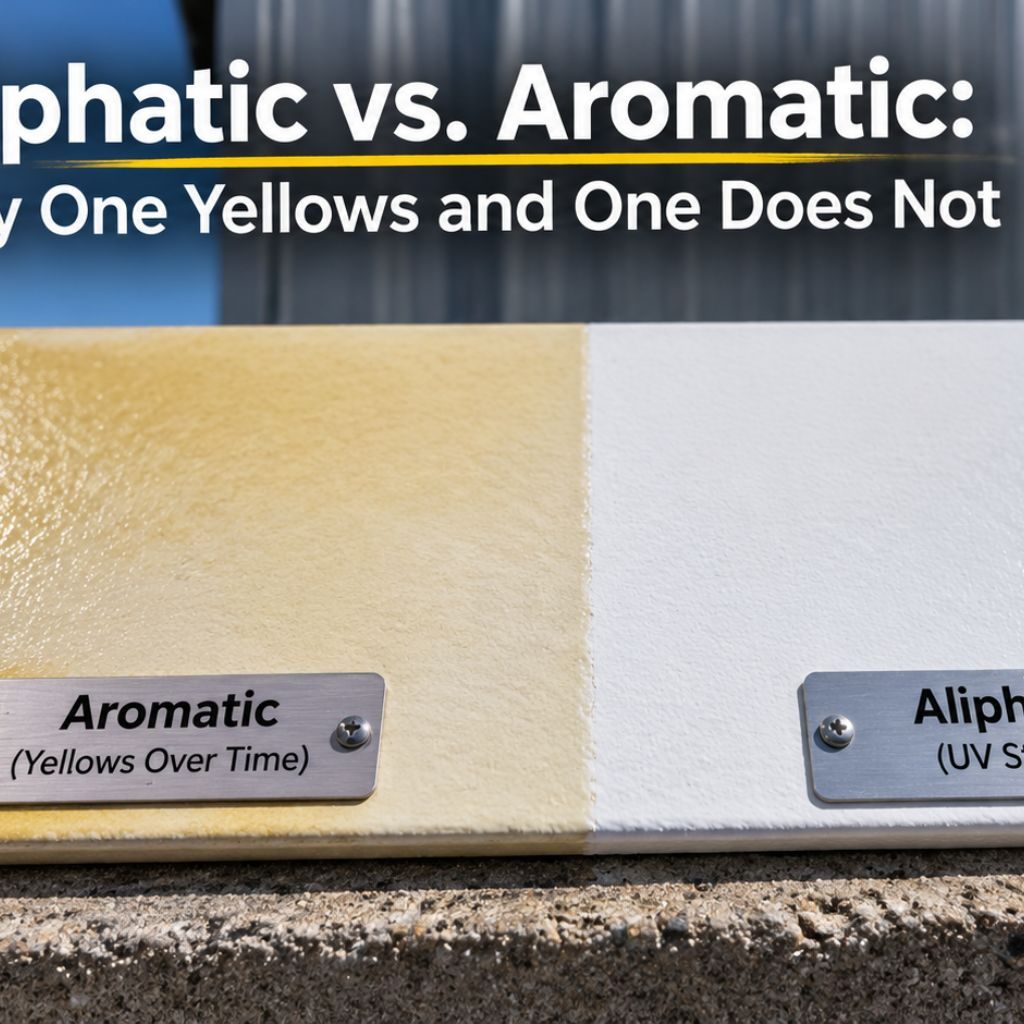
- UV. Most polyureas are aromatic and will chalk and discolor in sunlight. On exposed roofs, use an aliphatic topcoat or a UV-stable system. See aliphatic vs aromatic.
- Timing. Coat SPF within the window the foam and coating makers specify. Foam left exposed too long needs extra prep.
- Compatibility. Confirm the polyurea is approved for use over the specific foam.
More on roof systems in the complete guide to polyurea roof coatings.
Where polyurea foam work shows up
VFI lists signage, movie and stage props, theme park sets and displays among the jobs its hard coats are used on. Members of our network see the same mix, plus a few more:
- Monument signs and dimensional letters for businesses and subdivisions.
- Themed rockwork, trees and facades for parks, mini golf courses and water parks.
- Retail and trade show displays that get moved and bumped often.
- Architectural shapes such as cornices and column wraps, cut from foam and coated.
- Floats and event props that need to be light enough to move.
For applicators, foam work is a good way to use plural-component equipment you already own on jobs that aren’t floors or bedliners. Pricing tends to follow surface area and detail more than simple square footage, because carved pieces take more passes and more care.
Polyurea foam coating estimator
At 100% solids, one U.S. gallon covers about 1,604 square feet at 1 mil (a gallon is 231 cubic inches). Thicker coats and rough foam surfaces use more. Enter your numbers to estimate gallons and kits.
Polyurea foam coating estimator
The texture and loss factors are our working estimates, not manufacturer numbers. The target thickness should come from the coating’s data sheet and the job spec.
How to coat foam with polyurea
1. Shape and clean the foam. Cut, carve and sand. Blow off all dust, since it keeps the coat from bonding.
2. Fix the substrate. Fill gaps and seams between foam blocks. Glue and pin joints so they don’t open later.
3. Seal if the system calls for it. Some systems use a primer or sealer on EPS. Follow the coating maker.
4. Check conditions. Temperature and humidity affect how polyurea sprays and cures. Stay in the data sheet’s range.
5. Spray in passes. Build to the target thickness in multiple passes, crosshatching to avoid thin spots.
6. Check thickness. Use a wet film gauge as you go, or test coupons.
7. Topcoat. Prime and paint, or apply an aliphatic topcoat for UV stability on exterior pieces.
Common problems and causes
VFI’s own article list covers foam that bends after a hard coat, hard coats that crack, bubble or won’t dry, and inconsistent spray patterns. Those line up with what we hear from members:
- Warping. Thin foam pieces can bend after coating. Support the piece and coat both sides evenly when the design allows.
- Cracking. A coat that’s too rigid for the piece, or applied too thin over flexing areas.
- Bubbling or pinholes. Moisture, trapped air in the foam surface or off-ratio material.
- Soft or tacky spots. Usually off-ratio mixing or temperature problems. Check the equipment.
- Poor adhesion. Dust, mold release or a contaminated surface.
We go deeper on the equipment side in 5 polyurea application mistakes.
Safety when spraying polyurea on foam
Polyurea is made by reacting an isocyanate with an amine resin blend, which we explain in inside the isocyanate-amine reaction. The isocyanate side is a respiratory and skin sensitizer, and spraying it creates aerosol. This primer on what isocyanates are covers why exposure matters. Spray with the respiratory protection the product’s SDS calls for, in a ventilated booth or area, with skin and eye protection.
Also check fire requirements. VFI notes that several of its hard coats have fire testing for indoor and outdoor use. Theme parks, stages and public spaces often require documented fire performance, so ask for test data before you spec a coating.
Polyurea foam coating checklist
☐ Coating type chosen
Polyurea, hybrid or urethane for the traffic and exposure.
☐ Hardness suits the piece
Rigid enough to protect, flexible enough not to crack.
☐ Foam clean and joints secured
No dust, gaps filled, blocks pinned.
☐ Conditions in range
Temperature and humidity per the data sheet.
☐ Thickness verified
Gauge readings or coupons recorded.
☐ UV plan for exterior
Aliphatic topcoat or paint system.
☐ Fire data on file
When the venue or code calls for it.
Polyurea foam FAQ
Can you spray polyurea on styrofoam?
Yes. Spray-applied polyurea and hybrid hard coats are widely used on EPS and XPS foam for signs, props and theme park sets. Clean the foam well and follow the coating maker’s primer and thickness guidance.
Is polyurea better than urethane for coating foam?
For high-traffic and outdoor pieces, often yes. VFI describes polyurea hard coats as having better impact resistance and lower moisture sensitivity, at a higher cost. Urethane hard coats are cheaper and sand more easily.
Will polyurea melt foam?
Polyurea is typically 100% solids, so it doesn’t carry the solvents that can dissolve polystyrene. Check the data sheet, especially for primers, which may contain solvents.
How thick should polyurea be on foam?
It depends on the product and how much abuse the piece will see. Use the thickness on the coating’s data sheet and the project spec, and verify it as you spray.
Can polyurea go over spray foam roofing?
Yes, when the product is approved for use over that foam. On exposed roofs, use an aliphatic topcoat or a UV-stable system, since most polyureas discolor in sunlight.