Aliphatic vs. Aromatic: Why One Yellows and One Does Not
Anyone who’s watched a perfectly good-looking coating turn a dull yellow-brown after a summer in direct sun has run into this problem without necessarily knowing what caused it. It’s not a defect, and it’s not usually a sign the coating was applied wrong. It’s chemistry, specifically the difference between aliphatic and aromatic isocyanates, and understanding that difference explains a lot about why some products hold their color for decades while others start shifting within months.
This piece gets into what actually separates aliphatic from aromatic chemistry, why one yellows under UV exposure and the other largely doesn’t, and what that means practically when you’re choosing a product for a specific job.
Where This Distinction Actually Comes From
Polyurea and polyurethane coatings are built from a reaction between an isocyanate component and a resin blend, and the isocyanate itself comes in two broad chemical categories that behave very differently once exposed to sunlight. Aromatic isocyanates contain a benzene ring structure in their molecular backbone. Aliphatic isocyanates don’t have that ring structure, built instead around a straight or branched chain arrangement.
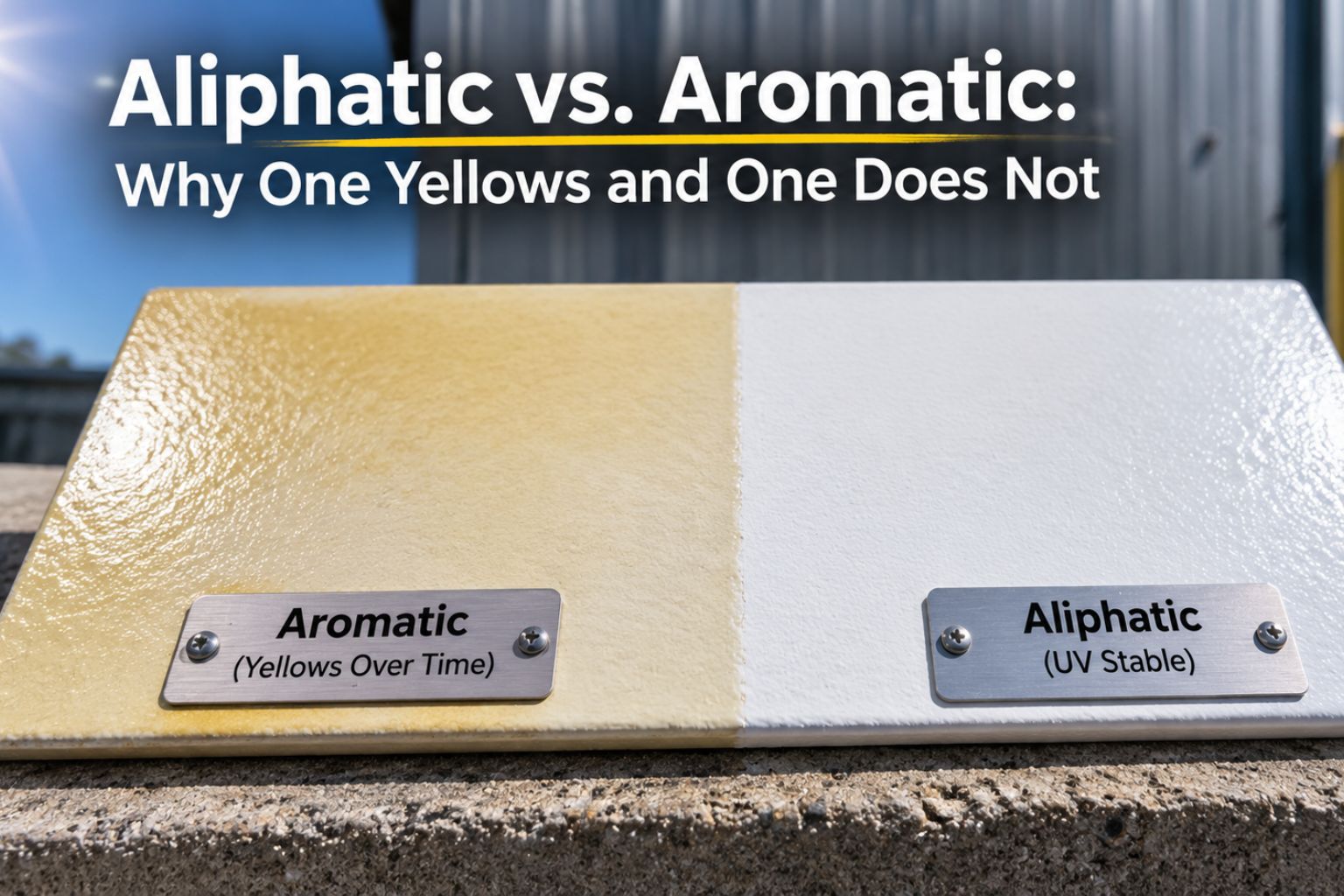
That structural difference sounds like a minor technical detail until you understand what UV light actually does to it. The benzene ring in aromatic isocyanates absorbs UV energy in a way that triggers a photooxidation reaction, breaking down the chemical bonds in that ring structure and producing new compounds that happen to be yellow or brown in color. Aliphatic chemistry, lacking that ring structure, doesn’t undergo the same reaction nearly as readily, which is the entire reason aliphatic-based coatings resist yellowing so much better.
What Yellowing Actually Looks Like in the Field
This isn’t usually a dramatic, sudden color change. It tends to creep in gradually, starting subtly enough that it’s easy to miss until you compare a sun-exposed area against a shaded or covered section of the same coating and see the difference side by side. A white or light-colored aromatic coating exposed to consistent sun will typically show the most visible shift, since yellowing is much harder to notice on a dark color and can even look intentional on certain earth-tone finishes.
Beyond color, aromatic chemistry under UV exposure can also become chalky at the surface, a powdery degradation of the topmost layer that rubs off visibly on contact. This is a related but distinct symptom from yellowing, both driven by the same underlying UV degradation process, but chalking affects surface texture and gloss retention in addition to color.
It’s Not Just About Looks
It’s tempting to file this under “cosmetic issue” and move on, but that undersells what’s actually happening. The same photooxidation reaction that causes visible yellowing is also breaking down the coating’s molecular structure at the surface, which means a yellowing aromatic coating isn’t just aging poorly in appearance, it’s genuinely degrading at the surface level, even if the bulk of the coating underneath remains structurally sound for a while longer.
For applications where appearance actually matters to the end use, architectural finishes, branded surfaces, anything a customer or the public will see over time, that degradation is a real performance issue, not just an aesthetic inconvenience. For applications buried, hidden, or otherwise shielded from UV exposure, the yellowing question becomes largely irrelevant, since the reaction that causes it depends entirely on UV exposure to occur in the first place.
Why Aromatic Chemistry Still Gets Used So Widely
Given all of this, it’s fair to wonder why aromatic isocyanates remain so common in the industry at all. The answer comes down to cost and reactivity. Aromatic isocyanates are generally less expensive to produce than aliphatic ones, and they tend to react faster, which matters for high-volume spray applications where cure speed directly affects labor efficiency and project turnaround.
For any application where UV exposure isn’t a significant factor, buried pipe coatings, interior tank linings, structural applications shielded from direct sun, the yellowing vulnerability of aromatic chemistry simply doesn’t come into play, and the cost and performance advantages make it the more practical choice. Our piece on polyurea versus polyurethane chemistry covers some of these broader cost and performance tradeoffs that factor into material selection alongside the UV question covered here.
Where Aliphatic Chemistry Earns Its Higher Price
Aliphatic isocyanates cost more, largely because of a more involved manufacturing process, but that added cost buys genuine long-term performance for any application with real UV exposure. Exterior architectural coatings, automotive and marine finishes, anything where color retention and surface appearance matter over years rather than months, tends to justify the premium.
This is exactly why aliphatic chemistry, often in the form of polyaspartic topcoats, gets used specifically as a protective layer over a base coat built from cheaper, faster-reacting aromatic chemistry. The aromatic base handles the structural and bonding job efficiently and affordably, while the aliphatic topcoat protects that base from the UV exposure it would otherwise degrade under. Our earlier piece on polyaspartic versus polyurea, covering cure windows and UV performance goes deeper into exactly this base-coat-plus-topcoat strategy, which is really the aliphatic-versus-aromatic distinction covered here applied to a specific product decision.
How to Tell Which One You’re Actually Getting
This is where a lot of buyers run into trouble, since product names and marketing language don’t always make the aliphatic-versus-aromatic distinction obvious. “Polyurea” alone tells you almost nothing about which isocyanate family a specific product uses, since both aliphatic and aromatic formulations exist within that broad category. The only reliable way to know is checking the product’s technical data sheet directly, which should specify the isocyanate type, or asking the manufacturer directly rather than assuming based on the product’s general category name.
This confusion connects to a broader pattern of buyers not fully understanding what they’re purchasing. Our piece on pure polyurea versus hybrid formulations covers a related version of this same problem, where the product name alone doesn’t tell the full story of what’s actually in the can or tank.
Aliphatic vs. Aromatic at a Glance
| Factor | Aromatic | Aliphatic |
|---|---|---|
| Molecular structure | Contains benzene ring | No ring structure, chain-based |
| UV/yellowing resistance | Poor, degrades and yellows under UV | Strong, resists yellowing significantly better |
| Typical cost | Lower | Higher |
| Typical reactivity | Faster | Often slower, more controllable |
| Common role | Base coats, structural linings, UV-shielded applications | Topcoats, exterior architectural finishes, UV-exposed applications |
| Chalking under UV | More prone to surface chalking | Significantly more resistant |
A Pattern Worth Recognizing in the Field
Anyone who’s spent enough time around coated surfaces starts to notice a specific pattern: a decorative garage floor or a branded exterior surface that looked flawless at installation, then a year or two later has that unmistakable dull yellow-amber cast, especially noticeable in comparison to any area that stayed shaded, under a shelf, behind equipment, along an edge that got less direct sun. That’s almost always an aromatic chemistry that either shouldn’t have been used for a UV-exposed application in the first place, or was applied without the aliphatic topcoat that would have protected it.
It’s a genuinely common callback scenario for applicators, and one that’s entirely avoidable with the right chemistry specified upfront. The frustrating part is that the underlying coating often isn’t actually failing structurally when this happens, it’s still bonded, still functional, just visibly degrading at the surface in a way that damages the finished look and, fairly or not, makes the whole job look like it was done poorly even when the real issue was a chemistry mismatch rather than a workmanship problem.
Practical Questions Worth Asking Before You Choose
A few questions tend to clarify whether this distinction actually matters for a specific project. Will the coated surface see meaningful direct or indirect UV exposure over its service life, or is it buried, interior, or otherwise shielded? If UV exposure is a factor, does the specification call for aliphatic chemistry directly, or an aliphatic topcoat over an aromatic base? Has the actual product’s isocyanate type been confirmed against its technical data sheet, rather than assumed from general marketing language? And does the project’s budget and timeline realistically account for the cost and reactivity differences between the two chemistries, rather than defaulting to whichever is more familiar to the applicator?
Application technique and equipment considerations apply somewhat differently across the two chemistries as well, particularly around reactivity and working time. Our members’ guide on polyurea application equipment questions touches on some of the practical, equipment-side considerations that come into play regardless of which isocyanate family is being sprayed.
Frequently Asked Questions
Does aromatic polyurea yellow immediately, or does it take time?
It’s typically a gradual process, becoming more visible over weeks to months of consistent UV exposure rather than happening suddenly, which is part of why it sometimes gets mistaken for a slow-onset defect rather than an expected chemical process.
Can aromatic chemistry ever be used outdoors?
Yes, particularly as a base coat under an aliphatic topcoat, or in exterior applications where color and surface appearance aren’t a priority, such as certain structural or utility applications where function matters more than finish.
Is aliphatic chemistry always the better choice?
Not universally. For UV-exposed applications where appearance matters, yes. For buried, interior, or UV-shielded applications, the added cost of aliphatic chemistry often isn’t justified by a benefit that will never actually come into play.
How can I tell if a product I’m considering is aliphatic or aromatic?
Check the technical data sheet directly, or ask the manufacturer specifically, since product names alone frequently don’t specify which isocyanate family was used.
Does chalking always accompany yellowing?
They’re related but distinct symptoms of the same UV degradation process, and while they often appear together on aromatic coatings under sustained UV exposure, the specific formulation and exposure conditions affect how visibly each one shows up.
Conclusion
The aliphatic-versus-aromatic distinction isn’t a minor technical footnote, it’s the actual chemistry behind one of the most common and most visible coating performance issues in the industry. Aromatic chemistry earns its place through cost and reactivity where UV exposure isn’t a factor, while aliphatic chemistry earns its higher price wherever color retention and surface appearance need to hold up under years of sun exposure. Knowing which one you’re actually specifying, rather than assuming based on a product’s general category name, is the difference between a coating that still looks right in five years and one that’s noticeably yellowed before its structural warranty is even close to running out.