
Why Grain Bin Coatings Are the Cheap Insurance Farmers Wish They’d Bought Sooner
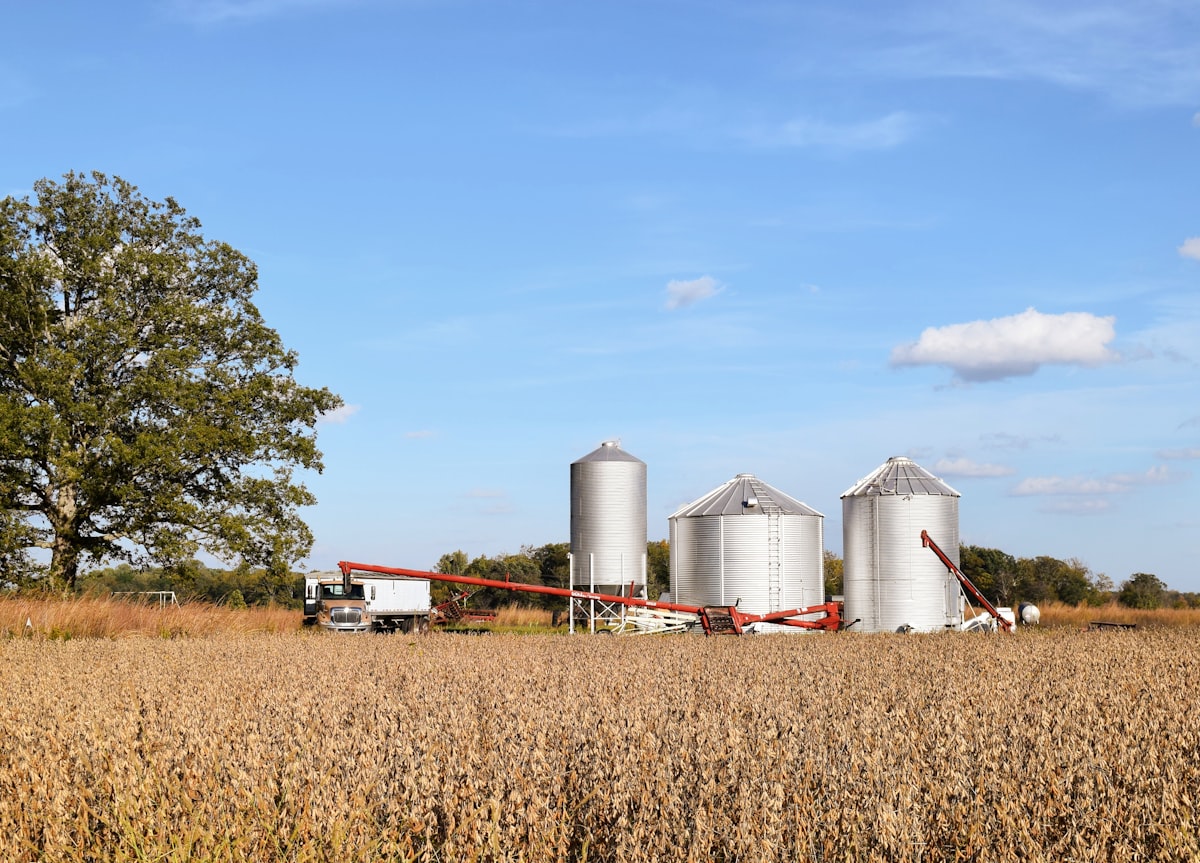
Grain bins standing guard over the harvest — the steel looks solid from a distance, but what’s happening on the inside tells a different story.
Ask any farmer who’s pulled the lid off a bin in early spring and found a ring of rust creeping up from the floor, and they’ll tell you it never seems to happen gradually. One season the steel looks fine. The next, you’re staring at pinholes, flaking paint, and a musty smell that means moisture got in somewhere it shouldn’t have. By the time the damage shows up on the outside, it’s usually already eaten through from the inside.
The Slow Attack Nobody Sees Coming
Grain bins live a rougher life than most people give them credit for. They bake in July sun, freeze solid in January, and get loaded and unloaded hundreds of times a year with augers scraping against their walls. Add in condensation from temperature swings between day and night, acidic residue from the grain itself, and the occasional fertilizer or chemical splash, and you’ve got a structure that’s fighting corrosion from the day it’s built.
Most of that fight happens where you can’t see it — underneath the paint, inside seams, around rivets and welds. Steel doesn’t need much of an opening to start rusting. A hairline crack in the coating, a scratch from a ladder, a spot where condensation pools instead of draining — any of these can be the start of a slow leak that ruins a season’s worth of grain before anyone notices.
The stakes climb even higher north of the border, where brutal freeze-thaw cycles put extra strain on seams and coatings alike. Producers researching grain bin coatings in Canada often find that climate resilience matters just as much as the coating chemistry itself.
What a Good Coating Actually Does
A proper coating isn’t just paint with a fancier name. It’s a barrier layer engineered to block moisture migration, resist the mild acids and chemicals grain and fumigants leave behind, and flex along with the metal as temperatures rise and fall instead of cracking. Done right, it seals every seam and rivet head so water has nowhere to sneak in, and it can knock several degrees off interior temperature swings simply by reflecting sunlight instead of absorbing it.
The payoff is straightforward: less spoiled grain, fewer structural repairs, and a bin that’s still earning its keep fifteen or twenty years after it went up instead of getting patched every other harvest.
Not All Coatings Are Created Equal
Walk into any farm supply store and you’ll find a shelf of options, but they’re not interchangeable. Epoxy coatings cure hard and stand up well to chemical exposure, though they can turn brittle over time and crack under constant expansion and contraction. Polyurethane topcoats add flexibility and UV resistance, which helps on bins that sit in full sun all day. Polyurea systems, meanwhile, cure in seconds rather than hours, form a seamless membrane, and stay elastic across a much wider temperature range — which is a big part of why they’ve become the go-to choice for agricultural steel.
That’s really the crux of the decision: patch problems bin by bin and rust spot by rust spot, or invest once in grain bin coatings built to handle everything a working farm throws at them. The upfront cost of a professional application is almost always smaller than the combined cost of lost grain, structural repairs, and an early bin replacement.
How the Application Actually Works
Coating a bin properly starts long before any spray equipment shows up. Crews first strip away old paint, rust, and mill scale, usually with abrasive blasting, so the new coating bonds to clean bare steel rather than sitting on top of trouble. Any pitting or seam damage gets repaired at this stage, since a coating can’t fix a structural problem — it can only protect what’s already sound.
Once the surface is prepped, a primer goes down to promote adhesion, followed by the coating itself, applied in controlled thickness across walls, roof, and floor. With polyurea and similar spray systems, the material sets almost immediately, which means crews can recoat an entire bin in a day or two rather than tying up storage for a week of drying time.
Signs Your Bin Is Overdue
A few warning signs tend to show up before things get serious: paint that’s chalking or flaking near the roof line, rust bleeding through at seams and lap joints, weep holes that stay damp longer than they used to, or grain coming out with a musty smell or discolored patches near the walls. None of these are dramatic on their own, but together they’re a bin telling you it needs attention before the next harvest goes in.
Worth the Cost?
Recoating a bin costs real money, and there’s no getting around that. But measure it against what’s on the other side of the ledger — a full bin of spoiled corn or soybeans, an emergency structural repair mid-harvest, or replacing a bin outright — and the math tends to work out in favor of getting ahead of the problem. A well-coated bin also holds its value better if it’s ever sold as part of the farm, since buyers notice clean, sound steel just as quickly as they notice rust streaks.
Quick Questions Farmers Often Ask
How long does a coated bin last before it needs attention again? Depending on the system used and how hard the bin works, most producers see well over a decade of solid protection before any touch-up is needed.
Can an older bin still be coated, or is it too late? As long as the underlying steel is structurally sound, most bins are good candidates — surface prep just takes a bit longer on a bin that’s been neglected for years.
Does coating help on both the inside and outside of a bin? Yes, and many operations do both, since interior surfaces face the acids and moisture of stored grain while the exterior takes on the weather.
That farmer pulling the tarp back in April doesn’t have to find rust waiting for them. A little planning, and the right coating applied before the damage starts, is usually all it takes to keep that from ever being the story.